
Carrier workflow preparation and market planning ahead of the storm.
Rapid assessment of claim concentration and available capacity.
Field resources moved toward developing volume as the event unfolds.
Assignment load and technician availability monitored throughout.
Standardised documentation and QA requirements held at volume.
Built to Expand Where Claims Develop.
Claim volume does not always develop where permanent staffing is concentrated. A localized storm can create an immediate need for additional field support, while a larger event can shift demand across multiple markets.
Patriot’s model brings together three complementary resources to help carriers respond as those needs take shape.
In markets where Patriot maintains permanent resources, that existing field presence provides a foundation for event response. Those resources become part of the broader capacity plan as local demand develops.
Regional field leadership connects market needs with field execution, helping coordinate resources and deployment priorities as the event footprint and claim concentration become clearer.
Deployable resources help address developing volume, including in markets where normal claim activity may not support a larger permanent presence. Capacity can be evaluated around the event rather than permanent staffing locations alone.
The goal is not simply more resources. It is resources aligned with where the work is developing.
This model is shown conceptually. It does not represent specific locations or live resource availability.
From Pre-Event Readiness to Sustained Field Support.
An effective response requires more than an initial deployment. It requires preparation before assignments arrive, an understanding of where demand is building, and ongoing attention to capacity and quality as the event evolves.
Patriot’s approach brings those responsibilities together.
Review carrier workflow expectations, identify potential resources, and plan for markets that may require additional support. Pre-event preparation creates a clearer starting point for coordination when claim volume begins to develop.
Areas of focus: Carrier workflows, resource identification, and market planning.
Evaluate claim concentration alongside available field capacity. As the event’s impact becomes clearer, identify where existing resources can support the response and where additional deployment may be needed.
Areas of focus: Affected markets, claim concentration, and available resources.
Align deployable capacity with identified market needs and regional field leadership. The focus is on directing additional support toward the areas where assignments are building, not treating every affected market as though its needs are the same.
Areas of focus: Resource placement, market priorities, and field coordination.
Monitor assignment load, scheduling, and technician availability as the response progresses. Ongoing capacity management helps identify where resource allocation may need to change as volume shifts between markets.
Areas of focus: Assignment load, scheduling, and technician availability.
Keep standardized documentation and quality assurance central to the response during high-volume periods. Additional capacity should support consistent field information, not introduce a different documentation standard as more resources are deployed.
Areas of focus: Documentation standards, QA, and consistency.
Capacity management and quality assurance are not final stages. Both run alongside the response from the moment resources begin moving.
Planning for the Season, or Responding Right Now?
Either way the conversation starts the same place: which markets, what volume, and what Patriot can realistically commit. Talk to our team, or explore a full carrier partnership.
Surge Volume Should Not Change the Standard.
Adding field capacity is only part of the challenge. Carriers also need documentation they can review and use consistently as assignments move through their claims workflows.
Patriot’s approach keeps standardized documentation and quality assurance in focus during surge periods, supporting the transition from field activity to carrier review.
Photos, measurements, and documented observations provide the information carriers and adjusters need to evaluate the property findings.
Establishing inspection scope and documentation expectations during preparation helps keep additional resources aligned with the carrier’s process as deployment expands.
Quality assurance remains part of the operating approach throughout the response, alongside capacity management and field execution.
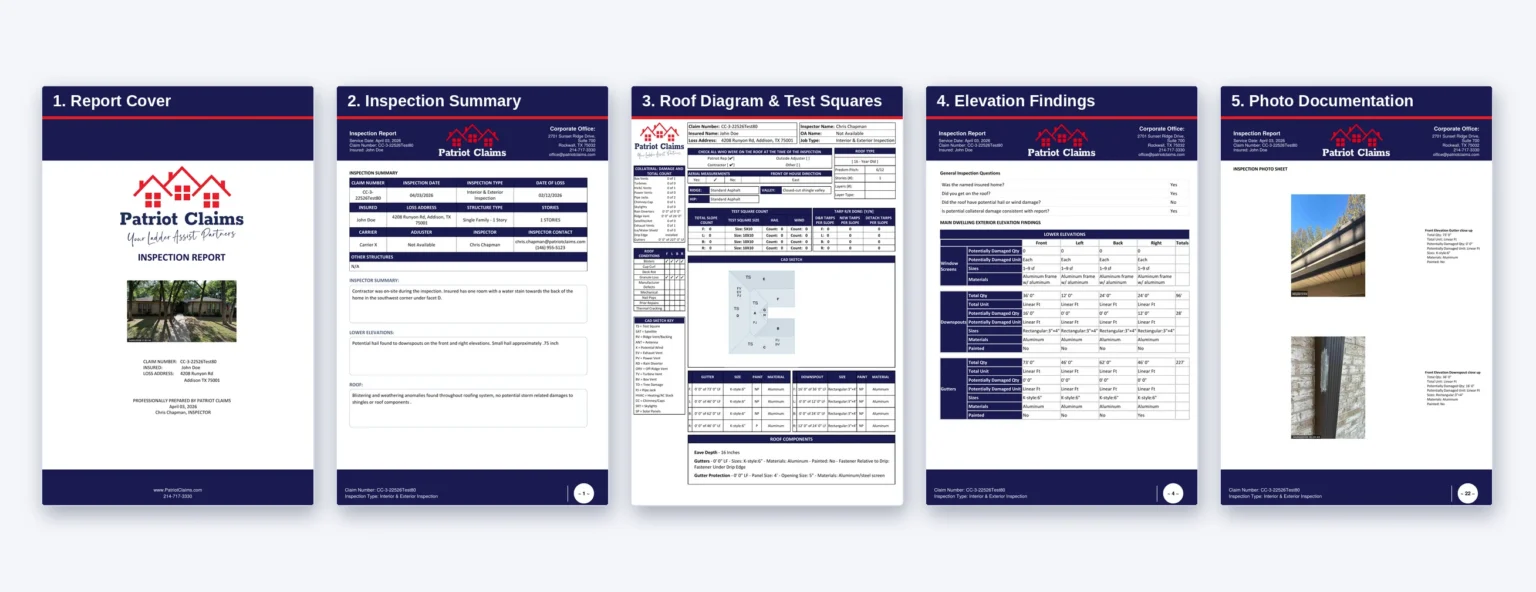
See how Patriot documents field findings for carrier review.
Representative pages from a Patriot Claims inspection report, including the summary, roof diagram with test squares and elevation pages. The same documentation standard applies during surge periods.
Get the Sample ReportMore field support. A consistent focus on the information your claims team needs.
What Carriers Ask Before an Event
It is far better to have one. Pre-event setup means intake, geographies, reporting and escalation are already configured, so the first assignment can be worked rather than becoming a setup exercise.
That is what the deployable team is for. Capacity is directed around the event rather than limited to where permanent staffing sits, which is usually the whole point in a CAT.
It should not, because the standard is not volume-dependent. Technicians use the same guided workflow, and files pass the same automated and manual review, whether the day carries ten assignments or a thousand.
They come from the same certified network and complete additional training specific to catastrophe deployment. A surge does not mean unfamiliar people working to an unfamiliar standard.
Capacity is finite and honest planning matters more than an optimistic answer. What can be committed depends on the events in play, which is why the capacity conversation happens before the season rather than during it.
That is a common case. CAT support is frequently used to cover a specific region or claim type while the carrier’s own staff handle the rest.
Where CAT support sits alongside the other services
| What the claim needs | The service that fits |
|---|---|
| Sudden weather activity or catastrophe volume | CAT & Surge Support (this service) |
| The adjuster does not need to attend the inspection | Direct Inspect |
| The adjuster is attending and needs safe roof access | Ladder Assist |
| The adjuster wants to take part without travelling | Virtual Inspect |
| The property is open and needs protecting now | Emergency Tarp |
| A geographic coverage gap needs filling | Deployable field capacity |
During an event these rarely arrive alone: mitigation, inspection and documentation are usually placed together so a property is protected and documented in one mobilisation.
Planning Your CAT Response?
Can we discuss capacity before an event occurs?
Yes. Pre-event readiness can include carrier workflow preparation, resource identification, and market planning. Starting the conversation before demand increases helps clarify the support your team may need and the requirements that should guide the response.
Can Patriot evaluate support for markets without a permanent local presence?
Deployable capacity is part of Patriot’s operating model. Regional field leadership and available resources can be considered alongside the needs of the affected market. Support for a specific location should be discussed based on the event, required services, and current capacity.
How quickly can field resources be deployed?
Deployment timing depends on the affected markets, site access, required services, and resource availability. Share the event footprint and anticipated needs with Patriot so the team can assess capacity and discuss next steps.
What information should we provide when discussing CAT capacity?
Start with the affected or anticipated markets, the type of field support needed, your expected timing, and any available estimate of assignment volume. Carrier workflow and documentation requirements are also helpful. Exact volume does not need to be known to begin the conversation.
Tell us where you need field capacity and our team will follow up.
Enter your details and the PDF opens right away.