
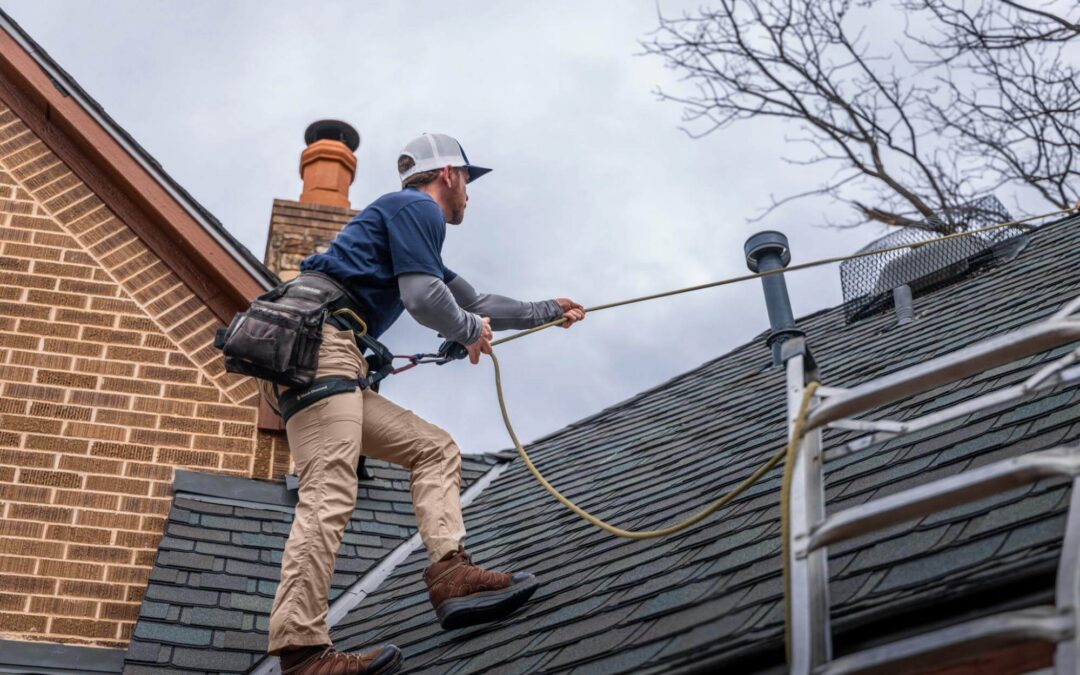
A virtual roof inspection uses a live video call guided by a Patriot Claims professional. The property owner walks through a structured remote walkthrough while the inspector captures documentation and builds a carrier-ready report, without requiring adjuster travel to the site. Direct Inspect brings a certified Patriot inspector to the property for a full physical assessment, 150 or more high-resolution photos, and a report delivered within 24 to 48 hours of the visit.
Both methods are real, defensible inspection tools. Neither is the right fit for every claim. Here is how to read the situation.
What Each Method Actually Involves
In-Person (Direct Inspect)
Direct Inspect is Patriot’s on-site inspection service. A certified Patriot inspector travels to the property and conducts a full physical assessment, walking every accessible roof area to document damage, condition, and scope. Every inspection produces 150 or more high-resolution photos covering all relevant roof planes, penetrations, and damage points. The report is delivered within 24 to 48 hours of the on-site visit and is built to support accurate, defensible claims decisions.
Direct Inspect is the standard for complex claims, high-value properties, multi-system damage, and any situation where documentation completeness is not negotiable.
Virtual Inspect
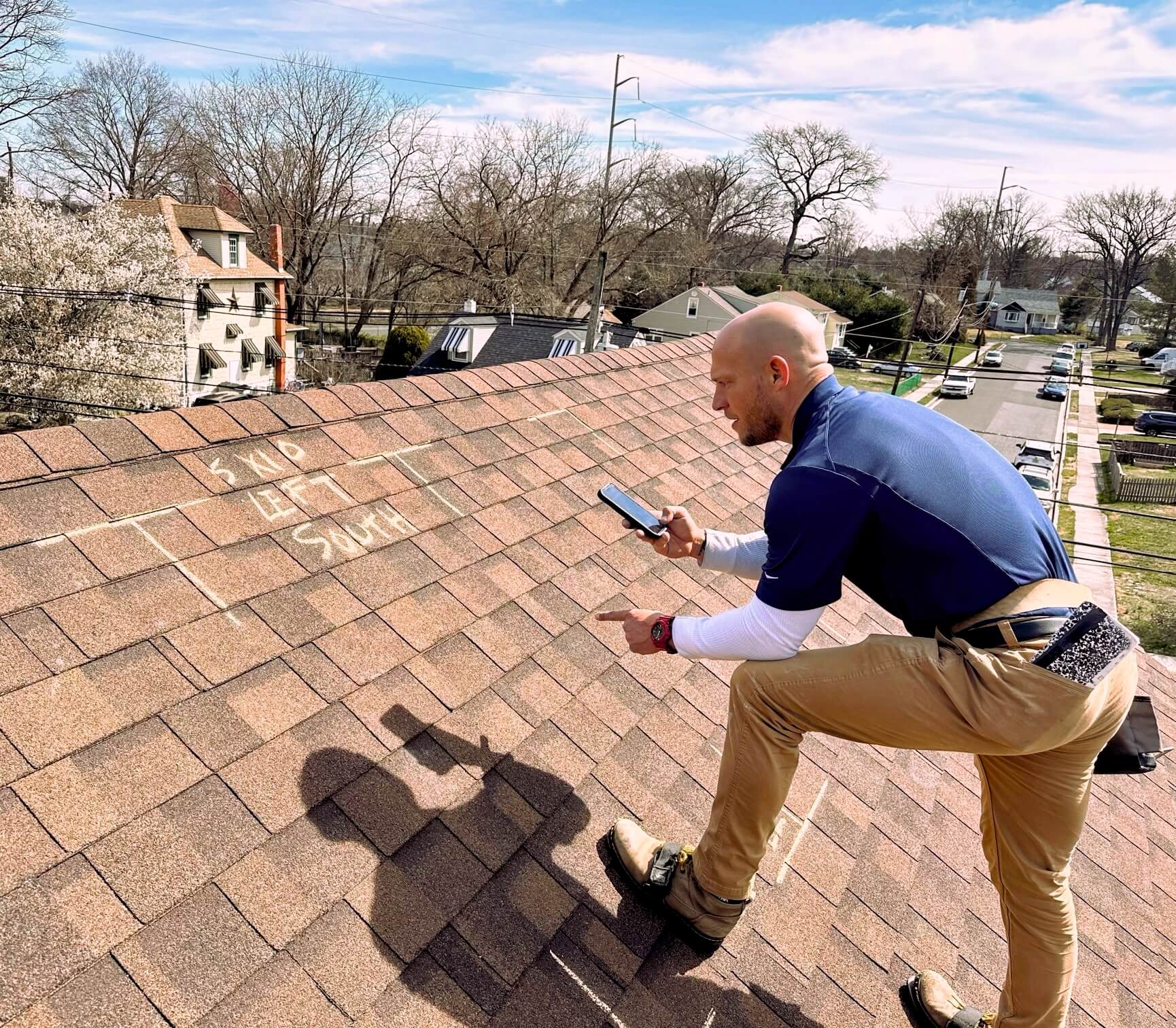
Virtual Inspect is a guided remote process. A Patriot Claims professional joins via live video call and directs the property owner through a structured walkthrough designed to capture all relevant, visible roof condition data. No adjuster travel required. The output is a carrier-ready report generated from confirmed on-site documentation, completed without on-site adjuster deployment. Virtual Inspect reports are accepted by insurance carriers nationwide.
Virtual Inspect is not an alternative to Direct Inspect for the same scenarios. It is a different tool, appropriate for specific claim situations. When it fits, it delivers accurate results. When it does not, Direct Inspect is the right call.
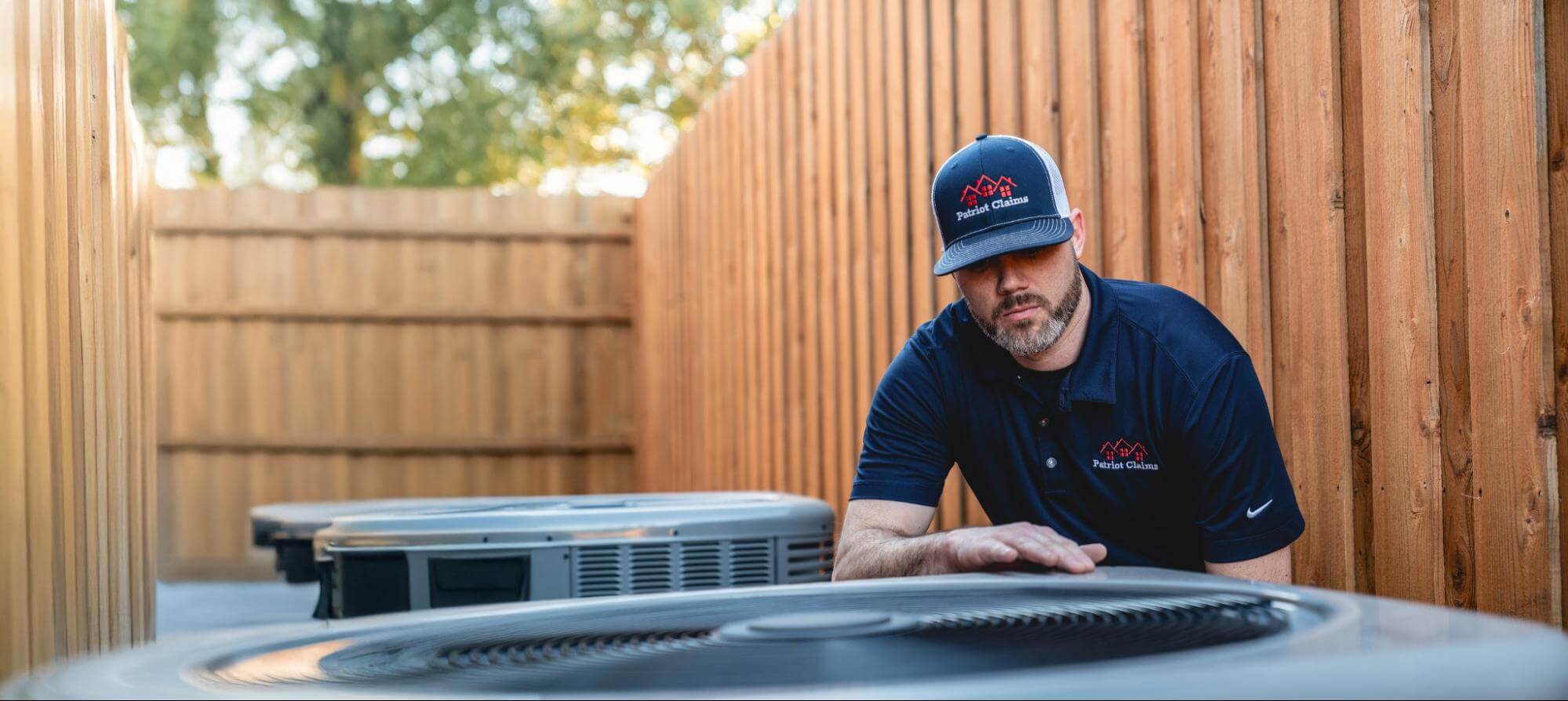
The Claim Scenario Navigator
Scenario 1: A CAT Event Just Hit. You Have 40 Properties to Assess.
The call: Direct Inspect
CAT events create volume. When you are coordinating inspections across 40 or more properties in a concentrated geographic area, consistency and delivery speed are what matter. Each property needs full documentation regardless of apparent scope, and the coordination overhead at CAT scale is not the right environment for remote inspection.
Direct Inspect delivers 150 or more high-resolution photos per property with a report within 24 to 48 hours of each on-site visit. Patriot’s national network spans 38 states and is built for CAT-scale deployment.
Scenario 2: Minor Wind Damage, Clear-Cut Scope, Cooperative Homeowner.
The call: Virtual Inspect may be appropriate
When the damage is limited in scope, the claim picture is reasonably clear, and the homeowner is reachable and willing to participate in a guided live walkthrough, Virtual Inspect can work well. A Patriot professional leads the session while the homeowner provides real-time on-site access and follows the inspection prompts. Virtual Inspect reports are accepted by insurance carriers nationwide, so the output carries the same credibility as an on-site report when the scenario is right.
Two conditions are non-negotiable here. First, minor has to actually mean minor. Claims that look simple at intake can surface additional damage during inspection. If there is any uncertainty about the full extent of the damage, on-site inspection is the right move. Second, policyholder cooperation is required. Virtual Inspect depends on the homeowner being available and willing to participate.
Scenario 3: The Property Is 200 Miles from the Nearest Adjuster.
The call: Evaluate Virtual Inspect first
Geographic isolation can add days to a claims timeline in markets where adjuster density is low or where demand has temporarily outpaced available capacity. When a property is in a rural area or a hard-to-reach location, scheduling an on-site visit introduces delay that affects both the policyholder and the claim cycle.
When the claim scope is appropriate for remote documentation, Virtual Inspect removes the geography barrier entirely. If the scope is too complex for a remote walkthrough, Patriot’s national network handles on-site deployment. Patriot operates across 38 states, so distance is a factor in the method decision, not a reason to avoid on-site inspection altogether. The claim scope makes the final call.
Scenario 4: The Roof Is Steep, Unsafe, or Otherwise High-Risk for Physical Access.
The call: Context-dependent
Steep-slope roofs, structural instability, and weather-related access concerns all affect how an inspection should be approached. Physical access risk is a real variable in the method decision, but it does not automatically make a claim appropriate for remote inspection. Some high-risk roofs still require the documentation depth that only physical access can provide, through Ladder Assist or Direct Inspect combined with proper safety protocols.
For a full breakdown of this specific scenario, including when Virtual Inspect is appropriate and when Ladder Assist is the right pairing, read: Virtual Inspect for Steep or Unsafe Roofs
Scenario 5: The Claim Is Disputed. The Homeowner Doesn’t Trust the Process.
The call: Direct Inspect
When a claim is contested, or when the homeowner has expressed concerns about how their property is being evaluated, the inspection approach needs to reflect the weight of the situation. Remote inspection, regardless of its accuracy, is not the right tool for a claim that may face scrutiny.
Direct Inspect provides thorough documentation from a certified, independent third-party inspector who is not an advocate for the carrier or the policyholder. That independence is what gives the report its weight. Homeowner skepticism is not a problem to be managed through process efficiency. It is a reason to give the claim the on-site assessment the evidence requires.
What Remote Inspection Can't Replace
A camera cannot walk a ridge line. Even with a trained Patriot professional guiding the walkthrough, remote inspection cannot replicate the physical assessment of every roof plane, penetration, and transition point. Claims involving multi-system damage, suspected structural issues, or interior damage that cannot be confirmed through visible surface observation require on-site access.
Claims subject to legal review, regulatory scrutiny, or active coverage dispute require Direct Inspect. A report backed by 150 or more photos from a certified on-site inspector is a different evidentiary artifact than a guided remote walkthrough. When there is any realistic chance the claim will become a legal matter, documentation depth is not optional.
This also applies to claims where the policyholder has raised questions about coverage accuracy. The most credible answer to that concern is a certified on-site inspector producing an independent, third-party report. Process efficiency is not the answer in that situation.
Finally, when a policyholder cannot or will not participate in a live guided walkthrough, Virtual Inspect is not a viable path. The process requires active policyholder involvement. Without it, on-site inspection is the only option.